Yes. In England, anyone who takes away other people’s waste as part of a business needs to register with the Environment Agency as an upper-tier waste carrier. That covers house clearance, rubbish removal and a man with a van doing tip runs. A new registration costs £191.02 and lasts three years, and renewal costs £130.25. Fees were checked against the GOV.UK registration page in October 2026.
This guide is for people asking whether they need a licence, or what one costs. If you are a customer checking a clearance company you are about to book, our guide to licensed waste carriers for house clearance covers the Waste Transfer Note, fly-tipping liability and red flags.
Who needs to register as a waste carrier?
GOV.UK says you must register if your business:
- transports waste (a carrier)
- buys, sells or disposes of waste (a dealer)
- arranges for someone else to buy, sell or dispose of waste (a broker)
A house clearance or rubbish removal business is a carrier, because it moves other people’s waste in its own vehicle. If it also sells on furniture, metal or other items it has cleared, it may be dealing too. These rules are for England. Scotland, Wales and Northern Ireland run their own schemes through SEPA, Natural Resources Wales and DAERA.
Upper tier or lower tier: which do you need?
The Environment Agency public register explains the split.
Lower tier is for people who:
- only carry waste they produced themselves in the course of their own business, unless it is construction or demolition waste
- are a charity or voluntary organisation
- deal only in animal by-products, mine and quarry waste, or waste from agricultural premises
Waste collection, disposal and regulation authorities can also be lower tier.
Upper tier is everyone else. The register says that if none of the lower-tier criteria apply, you are upper tier. Its examples include a business that “transports other people’s waste, like a skip company” and one that carries construction and demolition waste.
A house clearance company carries other people’s waste by definition, so it needs upper tier. The same goes for anyone doing paid tip runs. A builder carrying their own rubble also needs upper tier, because construction and demolition waste is excluded from lower tier.
How much does a waste carrier licence cost?
These are the current GOV.UK fees for England:
| What you are doing | Fee |
|---|---|
| New registration, carrying only your own waste (lower tier) | Usually free |
| New upper-tier registration | £191.02 |
| Renewing an upper-tier registration | £130.25 |
| Changing what your organisation does | £49.62 |
| New registration because your business type changes, or moving from lower to upper tier | £191.02 |
Spread over three years, an upper-tier registration works out at about £64 a year for the first term and about £43 a year after that. You apply online through the Environment Agency registration service. You will need the names and dates of birth of the owners, directors or partners, and details of any environmental offences they have committed.
How long does registration last?
Upper-tier registration has to be renewed every three years. Lower tier does not expire.
You must also tell the Environment Agency within 28 days if your contact details or management change, or if your activities change, for example adding broker work to carrying. You must also report it if someone in management is convicted of an environmental offence.
Is the waste carrier licence changing?
Yes, but not yet for day-to-day purposes. The Environmental Permitting (Waste Controlling or Transporting) Regulations 2026 were made on 22 July 2026. They replace carrier, broker and dealer registration in England with environmental permits or registered exemptions for “waste transporters” and “waste controllers”.
The main provisions come into force 12 months after the regulations were made, so in July 2027. Existing registrations carry on during a transition. In broad terms, most registered businesses move across when their current registration is due to expire, and applying early keeps the old registration valid while the permit is processed. Until then, the GOV.UK registration rules and fees above still apply. If you are starting a clearance business now, register now, and keep an eye on GOV.UK for the permit fees, which had not been published when this was written.
What happens if you carry waste without registering?
Transporting someone else’s waste for profit without registering is a criminal offence under section 1 of the Control of Pollution (Amendment) Act 1989. GOV.UK says not registering can lead to an unlimited fine.
Council and Environment Agency officers can stop a vehicle and ask to see its registration. Failing to produce it without a good reason can bring a £300 fixed penalty under section 5B of the same Act. If the waste you collected is then fly-tipped, the penalties go up again. Since July 2023 the maximum fixed penalty for fly-tipping in England has been £1,000, according to Defra’s announcement of the higher fines. Serious cases go to court.
What is the duty of care?
Everyone who handles waste has a legal duty of care to keep it secure and pass it only to someone authorised to take it. For a business that means:
- giving and keeping a Waste Transfer Note for each load
- describing the waste accurately
- taking it only to a permitted site, such as a licensed transfer station
Householders have a duty of care too. They must take reasonable steps to make sure their rubbish goes to an authorised person. Since July 2023, the maximum fixed penalty for a householder who fails to do this has been £600, according to the same Defra announcement. The government’s household waste duty of care guidance for councils explains how those penalties are issued. That is why sensible customers ask for your registration number before they book.
Do you need any other licence for house clearance?
Usually not for the clearance itself. There is no separate “house clearance licence” in England. Two other things can apply, depending on how the business runs:
- Scrap metal. Collecting scrap metal for sale needs a licence from the local council under the Scrap Metal Dealers Act 2013. A collector’s licence only covers that council’s area, so a collector working across several councils needs a licence from each one.
- Storing or sorting waste at your own yard. Keeping waste anywhere other than in the van normally needs an environmental permit or a registered waste exemption. Exemptions last three years. Most small operators avoid this by taking each load straight to a licensed transfer station.
Public liability insurance is not a legal requirement, but most customers, landlords and letting agents will ask for it.
How does a customer check the register?
It takes under a minute and costs nothing:
- Go to the public register of waste carriers, brokers and dealers.
- Search by business name, registration number (it starts with “CB”) or town.
- Check the result says upper tier, that the registration is current, and that the name matches the business on the quote.
Booking a licensed clearance in East Yorkshire
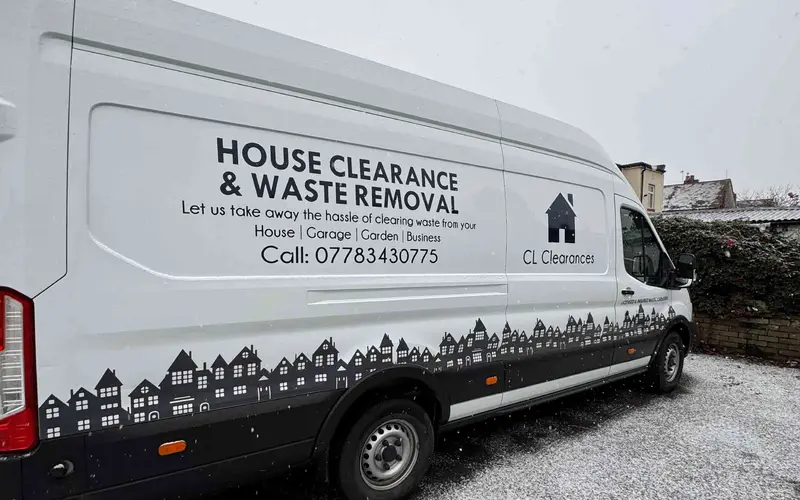
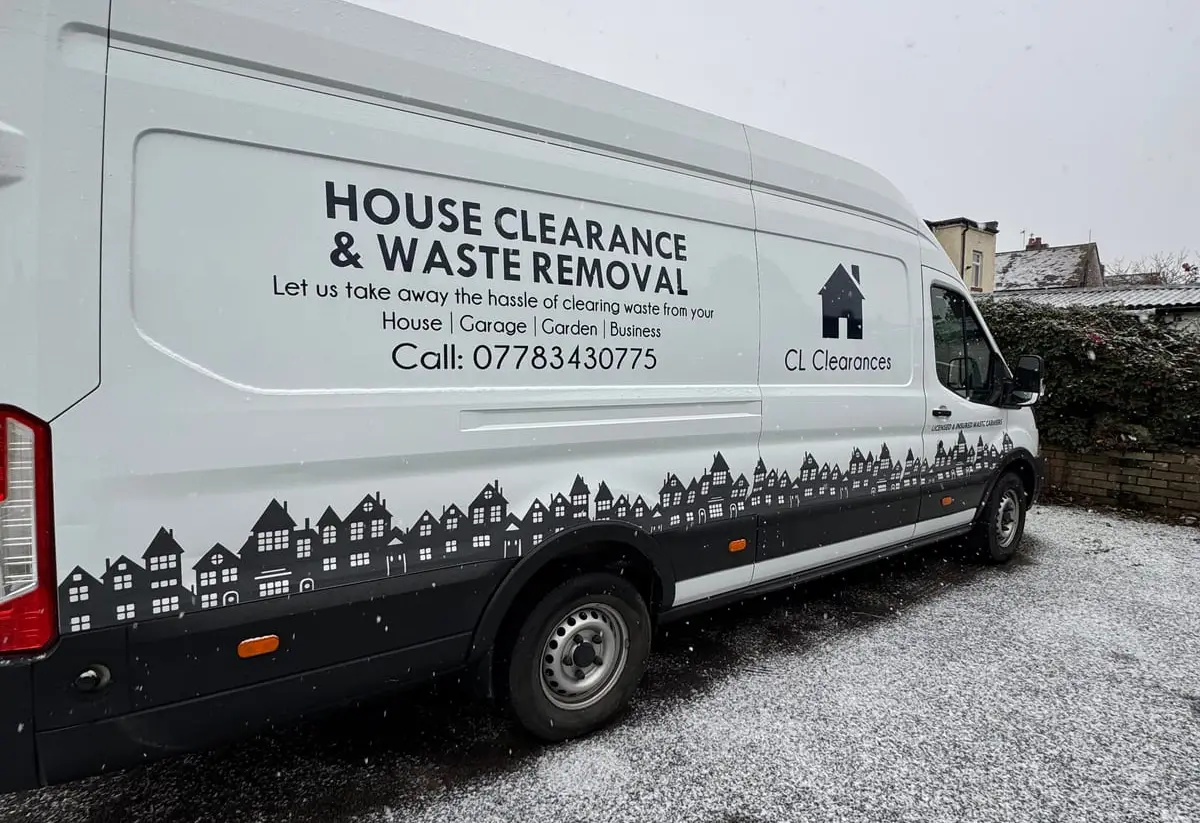
CL Clearances is owner-run from Howden and has been trading since 2016. We are registered as an upper-tier waste carrier, CBDU291452, which you can check on the register above. Every job gets a fixed written quote and a Waste Transfer Note. Charlotte Leighton quotes and attends every job herself, with no agency crews.
To get a price for a house clearance or rubbish removal, send photos by WhatsApp to 07783 430775 or email hello@cl-clearances.co.uk. For what a clearance usually costs, see how much is a house clearance.