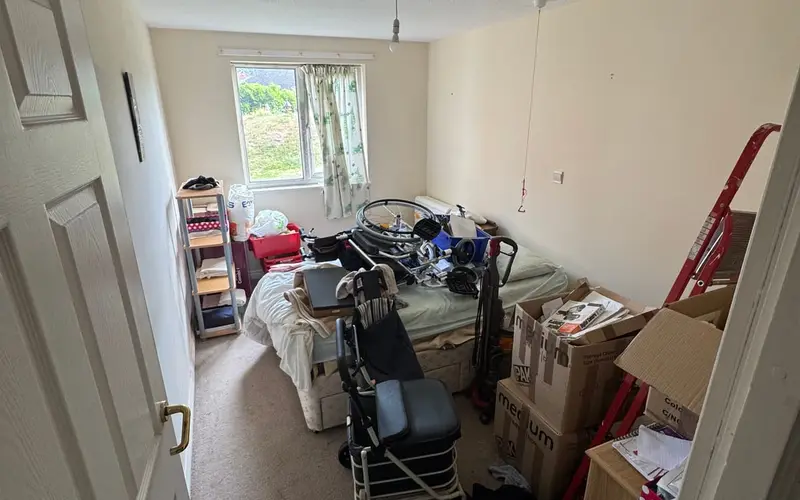
Almost. A licensed house clearance takes the contents of a property from top to bottom: furniture, appliances, beds, clothes and kitchenware, plus the loft, garage and shed. Usable items are reused or given to charity and the rest is recycled or disposed of under licence. The exceptions are a short list of hazardous items, such as asbestos, wet paint and chemicals, gas bottles and clinical waste. These need a separate legal route, so tell the company about them before the day.
This guide explains what is included, what needs special handling, what happens to it all afterwards, and what to take out first.
What does a house clearance take?
A full clearance should leave the property empty. With CL Clearances that includes:
- Furniture: beds, wardrobes, sofas, dining sets, desks and flat-pack
- Appliances: washing machines, cookers, fridges and freezers, TVs and small electricals
- Soft furnishings and clothes: bedding, curtains and clothing, plus carpets if you want them up
- Kitchen and household contents: crockery, pans, books, ornaments and the drawer everyone has
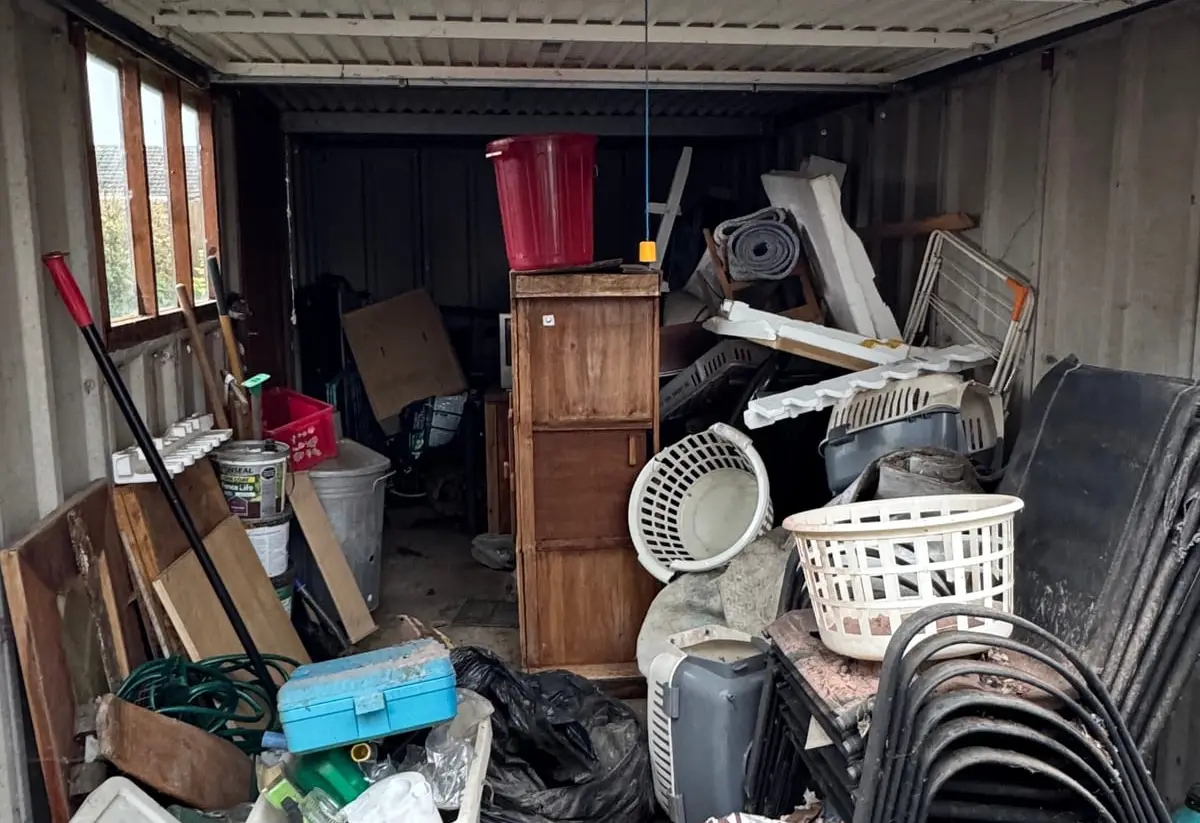
- Storage spaces: the loft, garage, shed, cellar and outbuildings, carried down ladders and up drives
- The garden: if it has gone over, it can be done on the same visit as part of a garden clearance
For the storage spaces, our shed, garage and loft clearance page lists what usually turns up. That includes old furniture, tools, bikes, paint tins, tyres, timber offcuts, broken freezers, Christmas decorations, old carpet and water tanks left by plumbers. Sheds and greenhouses can be dismantled and taken away too.
Is paperwork and personal property thrown away?
No. A proper clearance searches before it loads. Drawers, pockets, books, tins and envelopes are checked for:
- documents such as wills, deeds, policies, statements and passports
- cash, bank cards and jewellery
- keys, photographs and medication
These go into set-aside boxes and are handed to you, or to the executor, not put on the van. In a probate clearance this search can take as long as the clearing itself. In a hoarded home these items turn up in every room, which is one reason that work cannot be rushed.
What do house clearance companies not take, or charge extra for?
Some items need their own legal route. A licensed company will either handle them properly or tell you where they need to go. It will not hide them in the general waste.
| Item | Why it is different | What happens |
|---|---|---|
| Asbestos | Hazardous, and disturbing it is the risk | CL Clearances stops and recommends a survey and does not handle it |
| Wet paint, solvents, weedkiller, pool chemicals | Hazardous waste | Separated and taken to the right facility, or we advise on the council drop-off. Quoted per container |
| Tyres | Banned from landfill and ordinary skips | Taken to a tyre recycler at £5–£8 each |
| Fridges and freezers | Refrigerant gas has to be removed | Taken to an approved WEEE facility at £15–£25 each |
| Gas bottles | Pressurised, and not general waste | Tell us at the quote stage. Return them to the supplier where you can |
| Clinical waste and sharps | Needs a clinical waste route | Ask the GP, pharmacy or council that provides the local service |
| Pest or biohazard situations | Need specialist treatment | We say so at the first visit and work alongside the specialist |
Councils handle some of these themselves. In York, for example, the council’s household hazardous waste page says paint and household chemicals go to its recycling centres. Gas canisters and fire extinguishers go only to Hazel Court, and household asbestos can be booked for collection. Other councils have different rules, so check yours.
Upholstered furniture has its own rule. Sofas and armchairs can contain persistent organic pollutants, and Environment Agency guidance on upholstered seating says they must be incinerated, not sent to landfill. A licensed clearance sends them to the right place. A cheap operator may not.
What happens to everything that is taken?
Very little goes straight in a hole in the ground. Items are sorted by material as they are loaded so the transfer station can recycle them:
- Reuse and charity: furniture and household goods in good condition are kept separate and passed on
- Recycling: metal, wood and textiles go to their own streams
- WEEE: anything with a plug, from the freezer to the kettle, goes to an approved facility under the WEEE Regulations
- Licensed disposal: what is left goes to a licensed transfer station under our waste carrier licence, and you get a Waste Transfer Note for it
There is more detail in what happens to furniture after a house clearance. If the furniture is good enough for a charity collection, booking one before the clearance can reduce the bill. See charity house clearance for what charities will and will not take.
Do you have to sort anything before a clearance?
You do not need to bag things up, bring things downstairs, take up carpets or disconnect appliances. That is the job. A few things do help:
- Take out or mark what you are keeping. A sticker, a note on a door, or a room we are told not to touch.
- Remove the valuables you know about: documents, jewellery, cash and photographs. Tell us about any you suspect are hidden somewhere.
- Flag the awkward items: paint tins, chemicals, gas bottles, tyres, a piano, anything you think might be asbestos.
- Empty fuel out of mowers and other machines if you can, or tell us they have fuel in them.
- Check the tenancy or sale terms if it is a rental or a sale. Some agreements say the loft and outbuildings must be empty too.
The step-by-step guide to how a house clearance works covers the rest of the day.
Why does “everything” mean a licensed carrier?
Because what happens to it afterwards is partly your responsibility. Under the household waste duty of care you must pass your waste to someone authorised to take it. If an unlicensed operator fly-tips it, the trail can lead back to you. The licensed waste carrier guide shows how to check a company in under a minute.
Getting a price for a full clearance
CL Clearances is an upper-tier waste carrier, registered under CBDU291452. We have been clearing properties across East Yorkshire, Hull, Goole, Selby, York, Doncaster and North Lincolnshire since 2016. Charlotte Leighton quotes and attends every job, the price is fixed in writing, and you get a Waste Transfer Note.
Send two or three photos per room, plus the loft, garage and shed, by WhatsApp to 07783 430775 or email hello@cl-clearances.co.uk. Mention anything from the special-handling list above. For typical prices, see how much is a house clearance, and for the service itself, house clearance.